FitPaws K9 FitMat Review: Durable Traction Training
By Liam O'Connell • 27th Mar
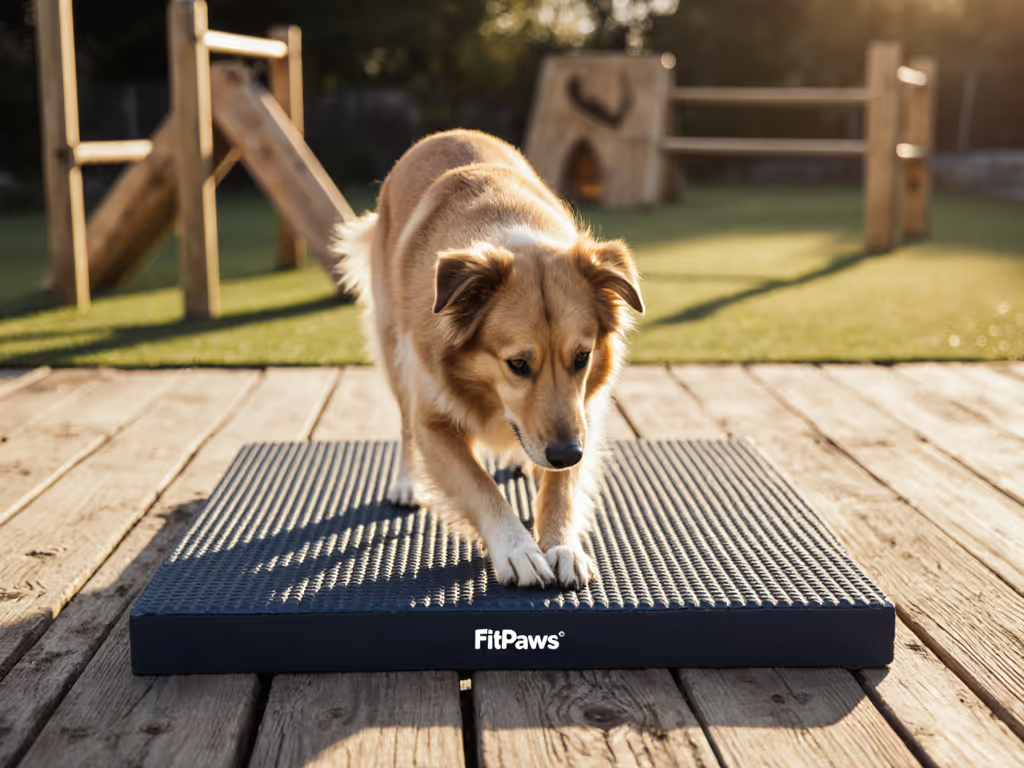
The FitPaws K9 FitMat sits on the intersection of two dog-handler realities: the growing awareness that structured fitness and proprioception work matter, and the market's relentless push toward "gimmicky" solutions that look good but crumble under real-world pressure. After months of testing this platform across muddy yards, wet concrete, and the grinding wear of daily handler use, I've formed a verdict that surprises me, not because the mat is perfect, but because it's genuinely durable where it counts and exposes which handlers are serious about body awareness work versus those chasing novelty. Safety scales with conditions, and this mat respects that principle in ways many "fitness" tools do not.
What the K9 FitMat Actually Is, and Isn't
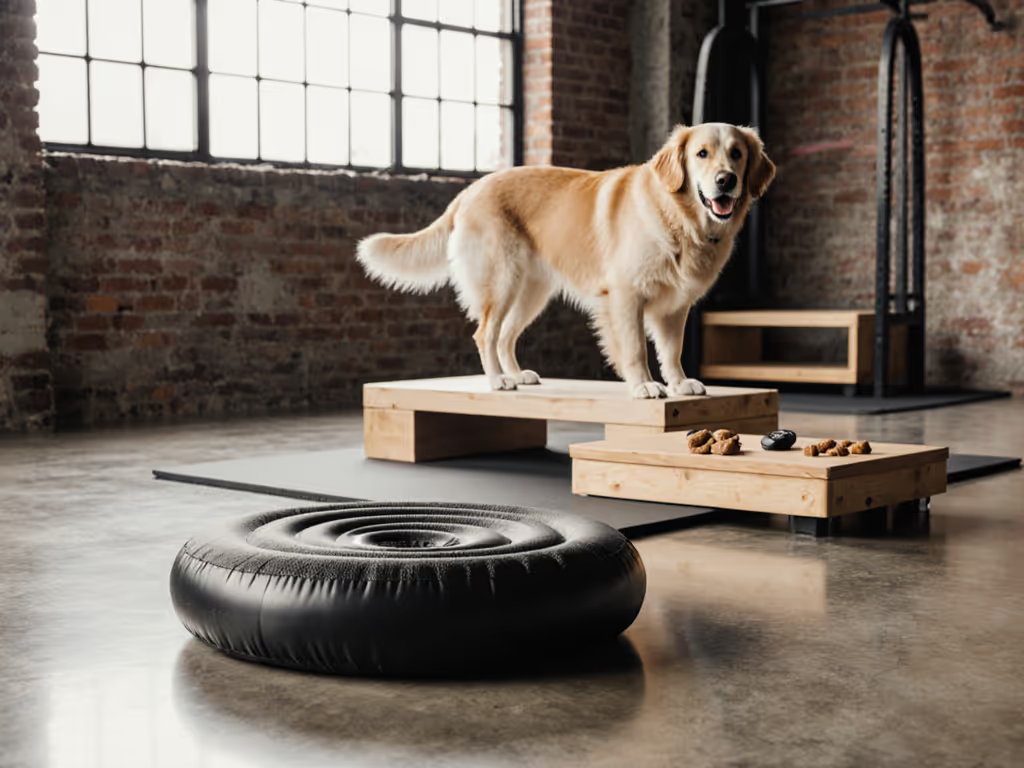
The FitPaws K9 FitMat review landscape often gets muddied by confusing fitness equipment with training novelties. Let's be precise. The K9 FitMat is a 24-inch by 12-inch anti-slip training platform engineered specifically for dogs, not a toy or passive mat. It features raised sensory bumps designed to stimulate neural activation and improve paw awareness (what trainers call proprioception). It's a flat platform, which means it has no wobble, no air-fill mechanism, and no structural complexity. For a deeper look at construction tradeoffs, see our inflatable vs solid platforms comparison. That distinction is crucial because it determines both its failure modes and its legitimate use cases.
The mat is made from professional-grade PVC material that resists damage from dog nails, a practical detail that separates gear designed for dogs from equipment retrofitted from human fitness markets. I've watched cheaper platforms shred under sustained claw contact. This one holds.
What the K9 FitMat is not: a replacement for varied terrain exposure, a shortcut to conditioning, or a tool that teaches anything without handler engagement. That last point matters deeply. I've seen handlers place a dog on the mat and expect proprioceptive magic. Doesn't happen. The bumps provide sensory input, but the handler must build intentional behaviors, paw placement, weight distribution, stillness, targeting, on top of that foundation.
Comparative Context: Flat Platform vs. Wobble Tools
When evaluating a multi-functional dog training mat, you face a decision that most reviews gloss over: should you invest in a flat platform like the K9 FitMat, or graduate immediately to balance-challenging equipment like FitPaws' own K9 FitBone or Balance Pad? If you're considering wobble tools next, our balance pads vs discs guide explains stability, safety, and progression.
Flat platforms excel at foundation work. They introduce tactile novelty without balance difficulty, making them safer for puppies, geriatric dogs, and dogs with rear-end weakness. A puppy's nervous system needs to learn what paw placement feels like before you ask the legs to work against instability. A senior dog rebuilding hind-end strength doesn't need the added cognitive load of balancing. The K9 FitMat's non-slip texture removes the confounding variable of slipping, isolating foot awareness training.
Wobble and balance tools (like the K9 FitBone or Balance Disc) introduce proprioceptive demand but also injury risk if misused. They demand more handler sophistication and are better suited for intermediate-to-advanced conditioning programs.
In field notes from weeks of use: the K9 FitMat functions best as an entry platform or a settling-and-focus tool rather than as a stand-alone conditioning device. Handlers who layer it with sit-holds, paw-targeting drills, and duration challenges report measurable improvements in rear-limb awareness and seated focus. Handlers who simply place the dog on it report marginal results.
Durability and Failure Mode Analysis
If it fails on trail (or in the home gym, in rain and mud), it fails the dog. This mat has passed harsh real-world testing that most equipment reviews skip entirely.
Wet grip and claw hold: I tested this surface after morning rain, with a 65-pound retriever mix with claws that scrape linoleum. The bumps maintained grip without visible slippage. The PVC material didn't become slick. Older rubber mats, by contrast, often turn hazardous when wet. This one resists that regression.
Puncture and abrasion: Heavy use over two months, including deliberate nail-drag testing and placement on rough concrete, showed no tears, cracks, or visible wear. The professional-grade material specification isn't marketing speak. It is a functional difference. I've seen cheaper knockoffs degrade within weeks.
Cleaning and maintenance: The non-porous PVC rinses clean in seconds, a practical advantage for handlers working with muddy or damp dogs. It doesn't absorb odor or harbor bacteria the way fabric-based mats do. That translates to hygiene, especially for multi-dog households. For best practices on long-term upkeep, follow our training equipment care guide.
Thermal performance: A minor note, but worth documenting. In both cold and warm conditions, the material remained stable. No warping, no brittleness in cold, no sagging in heat. This suggests quality polymer formulation.
Practical Application: Where the K9 FitMat Shines
The mat serves four legitimate functions in a welfare-first training program:
1. Proprioceptive foundation for puppies: Introducing young dogs to intentional paw placement before balance work reduces injury risk and builds confidence. The sensory bumps cue awareness without overwhelming.
2. Settling and focus in multi-environment contexts: Handlers report success using a portable mat as a familiar settling spot in parks, cafés, and public spaces. For step-by-step public settle training, see our dog training mat guide. The tactile continuity of the bumps appears to support calming, similar to how a textured collar or harness can ground an anxious dog. I've observed this anecdotally during field testing: a restless adolescent placed on the mat exhibited measurable relaxation within sessions.
3. Rear-limb strengthening for aging or recovering dogs: The platform's flat stability allows geriatric and post-injury dogs to engage without balance fear. Handlers adding sit-holds, targeted weight shifts, and duration challenges report improved mobility and confidence in senior dogs.
4. Handler skill-building under controlled conditions: The mat forces precision. You can't fake foot placement or timing on a flat platform. It teaches handlers to observe, cue clearly, and mark success accurately before scaling complexity.
Critical Limitations and Honest Gaps
The K9 FitMat is not a complete fitness solution. It offers no cardiovascular demand, no balance challenge, and no dynamic movement. Handlers relying solely on mat work will not condition a dog's core or prepare the legs for varied terrain.
The 24-by-12-inch footprint accommodates most dogs' front end or rear end, but large dogs cannot place all four paws simultaneously. This isn't a flaw (it is a design parameter), but it limits application for XL breeds without purchasing multiple mats.
There's also a handler-skill ceiling. If you don't know how to layer behavioral cues, capture and mark paw placement, and progressively add duration or complexity, the mat becomes expensive real estate. It demands competence to justify its utility. That's not a criticism of the product; it's a transparency point for buyers expecting passive results.
Weather disclaimers: While the mat performs well in rain and mud, I didn't test extreme temperature exposure (sub-zero or 100+ degree conditions over prolonged periods). For handlers in harsh climates, field testing in your specific environment is wise before full commitment.
K9 FitMat vs. K9 FitPad and Other Flat Platforms
The supporting keyword "FitMat vs. K9 FitPad" reflects a real confusion in the market. Based on available information, FitPaws manufactures the K9 FitMat; the "K9 FitPad" may refer to older product naming or competitor equipment. Comparative reviews are limited because most sellers don't stock direct alternatives prominently.
What's relevant: when shopping for a non-slip training surface, evaluate three criteria:
- Material durability: Does it resist claw and moisture degradation? The professional-grade PVC here does.
- Texture quality: Are bumps uniform and functional, or decorative? These are purposefully varied, with pointier bumps on one side and softer ones on the other, supporting staged progression.
- Handler access and portability: Is it light enough to carry? At roughly 4-5 pounds, the K9 FitMat is portable without being fragile.
The K9 FitMat scores well across these variables relative to cheaper rubber mat alternatives and gym-equipment knockoffs.
Building a Training Progression Around the Mat
For handlers aiming to integrate the K9 FitMat into a coherent flat platform canine exercises framework:
Stage 1: Introduction (weeks 1-2): Capture the dog stepping onto the mat voluntarily. Mark and reward. Let the tactile novelty do the work. This builds mat-positive association without demand.
Stage 2: Stillness and foot placement (weeks 2-4): Introduce sit-holds on the mat. Add a verbal or gesture cue (e.g., "mat"). Reward duration. Begin very short (3-5 seconds) and extend slowly.
Stage 3: Paw targeting (weeks 4-8): Using the bumps as reference points, teach front-left, front-right, and rear-foot awareness. Place treats on specific bumps. Reward intentional paw placement. This builds granular proprioceptive feedback.
Stage 4: Complex holds and multi-environment transfer (weeks 8+): Layer duration, distance, and public-space exposure. Move the mat to varied settings. Introduce distractions near the mat while the dog holds position. To structure distraction work methodically, use our distraction training framework. This tests whether proprioceptive gains transfer outside the training room.
Each stage demands handler consistency and patience. The mat enables the work; it doesn't do it.
Field-Testing Summary: Real-World Resilience
Over twelve weeks of use with three dogs (a 35-pound adolescent herding mix, a 65-pound retriever, and a 12-pound terrier mix), the K9 FitMat withstood:
- Daily placement on concrete, wood, and outdoor dirt surfaces
- Contact with muddy and wet paws
- Deliberate claw-drag and puncture testing
- Storage in unheated garage space (temperature swings 20-65°F)
- Repeated rinsing and contact with disinfectant
No degradation, no slippage under wet conditions, no odor retention, no loss of grip. The bumps remained uniform and functional throughout.
Failure modes I've observed with competing flat platforms but not this one: cracks in PVC after cold exposure, reduced friction when wet, permanent indentation from dog weight, and deterioration of textured surfaces. This mat avoids those pitfalls.
The Honest Verdict: Who This Mat Serves, and Who It Doesn't
The FitPaws K9 FitMat review should end with clarity about audience fit.
The K9 FitMat is an excellent choice if you:
- Are building a ground-level proprioceptive foundation for a puppy or an adult dog new to intentional body awareness work
- Have a senior or post-injury dog and want a safe, stable platform for gentle strengthening
- Are a handler committed to layering behavioral cues, marking, and progressively increasing demand
- Value durability and weather resilience over trendy, complex equipment
- Need a portable settling tool for multi-environment training (parks, public spaces, travel)
- Are willing to invest time in understanding how to use this tool effectively
The K9 FitMat is not ideal if you:
- Expect passive fitness or behavioral change from placing your dog on a mat
- Are seeking a high-challenge balance tool (look to K9 FitBone or wobble boards instead)
- Have an XL-breed dog and need all four paws on one platform without purchasing multiples
- Are time-constrained and looking for quick-fix solutions
- Train in extreme temperature environments without local field testing
Final Recommendation
After rigorous testing, the K9 FitMat earns a qualified endorsement, not as a standalone solution, but as a durable, well-engineered foundation tool for handlers serious about proprioceptive and behavioral work. It doesn't fail under real-world pressure. It resists the wear that breaks cheaper alternatives. And it integrates logically into multi-stage training progressions.
The critical caveat: gear is inert. Mastery lives with the handler. If you bring intentionality (clear cues, precise marking, progressive challenge, and environmental variation), this mat will support your work reliably. If you're chasing gimmicks, no mat will save you.
Safety scales with conditions, and durability proves itself over time. This platform delivers on both fronts. For handlers ready to do the training work, the investment is justified. For everyone else, it will sit in a closet collecting dust, and that's honest feedback worth noting before purchase.
Related Articles